
Mobile Marketing Trends in Healthcare (2026)
Your patient missed their appointment. Again.
You had sent an email reminder three days ago. They probably never opened it. But if you had sent them a WhatsApp message or an SMS the morning of the appointment? Chances are, they would have been there.
This is the gap that mobile marketing fills for healthcare today. And the good news is, it is not complicated. Whether you run a single-doctor clinic in Hyderabad or a multi-speciality hospital in Bengaluru, mobile marketing channels are giving healthcare providers a direct line to their patients like never before.
Let us break down exactly what is working, what is changing, and what you should be doing right now.
Why Mobile Marketing Matters in Healthcare
Think about how your patients spend their day. They wake up, check their phone. They scroll through messages during lunch. They look up symptoms on their phone before calling your clinic.
India now has over 500 million mobile internet users. A large chunk of these people are your potential or existing patients. They are reachable, but only if you meet them where they are – on their phones.
Healthcare mobile marketing is simply using mobile channels – SMS, WhatsApp, apps, mobile websites, and more – to connect with patients, remind them about appointments, share health tips, and build long-term trust.
It is not a fancy concept. It is just smart communication for the way people actually live.
| 📊 Studies suggest that over 80% of patients in urban India prefer receiving appointment reminders via SMS or WhatsApp rather than email or phone calls. |
SMS Marketing: Great Choice for Patient Reach
You might think SMS is old-fashioned. It is not.
SMS has an open rate of around 98%. Compare that to email, which sits at roughly 20-25%, and you understand why hospitals, diagnostic centres, and pharmacies still rely on SMS as their primary mobile channel.
What Healthcare Providers Are Using SMS For
- Appointment reminders (same-day and 24-hour prior)
- Lab report ready notifications
- Medicine refill reminders for chronic disease patients
- Health camp and free check-up announcements
- Post-discharge follow-up messages
- Seasonal health alerts (dengue, flu, heat stroke warnings)
The power of SMS is its simplicity. No internet needed. No app needed. Every mobile phone can receive it. That is why a government hospital in Rajasthan and a premium clinic in South Delhi are both using it.
| 💡 Pro Tip: Use the patient’s name in your SMS and send it from a registered sender ID like AX-YOURHOSPITAL for higher trust and TRAI compliance. |
And here is the thing – SMS combined with a call-to-action link (like a mobile-friendly booking page) turns a simple reminder into a conversion tool.
WhatsApp Business: The New Appointment Desk
If you are still not using WhatsApp Business for your clinic or hospital, you are leaving a huge opportunity on the table.
WhatsApp has over 500 million active users in India alone. Your patients are already on it, messaging their family and friends. Setting up a verified WhatsApp Business account lets you enter that same space with official, trusted communication.
What Makes WhatsApp Different from SMS
- You can send images, PDFs, and voice notes – not just text
- Patients can reply and ask questions instantly
- Automated message flows can handle FAQs without staff involvement
- Read receipts tell you if the message was actually seen
- Broadcast lists let you reach hundreds of opted-in patients at once
Apollo hospitals recently reported a 38% reduction in appointment no-shows after switching from phone call reminders to WhatsApp messages. The reason is simple: people respond to WhatsApp.
| ⚠️ Important: Always get written or digital opt-in consent from patients before messaging them on WhatsApp. Sending unsolicited messages can get your number flagged or banned by Meta. |
AI-Powered Chatbots and 24/7 Patient Support
Your front desk is not available at 11 PM. An AI chatbot is.
Healthcare chatbots have gone from gimmick to genuinely useful in the last two years. The AI behind them has improved dramatically, and patients are increasingly comfortable chatting with a bot for non-urgent queries.
What a Healthcare Chatbot Can Handle
- Answer questions like ‘What are your OPD hours?’
- Help patients book, reschedule, or cancel appointments
- Collect pre-appointment information (symptoms, insurance details)
- Send post-appointment care instructions
- Triage basic symptoms and recommend the right department
Hospitals like Apollo and Fortis have been using chatbot-powered patient engagement systems for a while. Smaller clinics are now catching up, thanks to affordable tools built specifically for the Indian market.
| 🤖 Key insight: A chatbot does not replace your staff. It handles the repetitive tasks so your staff can focus on conversations that actually need a human. |
Pair your chatbot with WhatsApp Business API, and you have a 24/7 patient support system running on autopilot.
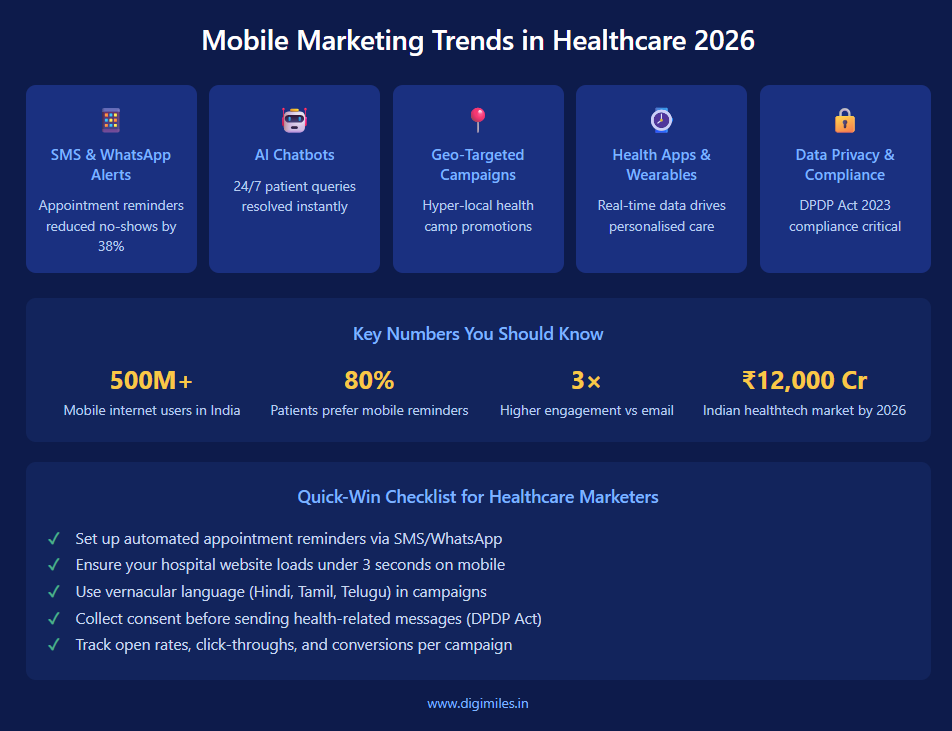
Figure 1: Mobile Marketing Trends, Key Stats, and Quick-Win Checklist for Healthcare Providers in India | Source: www.digimiles.in
Geo-Targeted Campaigns for Hyperlocal Health Promotions
Imagine you are running a free blood pressure check-up camp this Saturday in Koramangala, Bengaluru. You want people within a 3-km radius to know about it.
Geo-targeted mobile marketing makes this possible.
With location-based SMS and app-based push notifications, you can define a geographic zone and send health promotion messages only to people within that area. No wasted reach. No irrelevant audiences.
Real Use Cases in Indian Healthcare
- Announcing a new branch opening in a specific neighbourhood
- Promoting flu vaccine camps during monsoon season in a particular zone
- Targeting diabetic care awareness messages during World Diabetes Day in tier-2 cities
- Running blood donation drives in a specific pin code
Health Apps and Wearable Integration
The Indian health app market is growing fast. From period trackers, step count smart watches, heart beat rate, to diabetes management apps, patients are actively using apps to monitor their health.
For healthcare providers and pharma companies, this creates a new marketing and engagement channel: in-app messaging and wearable data integration.
How This Plays Out in Practice
- A hospital app that sends push notifications for medicine refill schedules
- A wearable device that alerts the patient’s care team when vitals go out of range
- Personalised health tips delivered via app based on a patient’s diagnosis
- Gamified health goals that keep patients engaged between appointments
Companies like Practo, mFine, and 1mg have built entire ecosystems around this. But even a standalone hospital or clinic can use simple push notification tools to stay connected with patients between visits.
The keyword here is personalisation. Generic messages get ignored. Personalised health nudges based on actual patient data get opened.
Mobile-First Website Experience in Healthcare
Here is a quick test. Open your hospital or clinic website on your phone. Does it load in under 3 seconds? Can you easily find the phone number or appointment booking button without zooming in?
If the answer to either question is no, you are losing patients before they even contact you.
Google’s Core Web Vitals, which directly affect your search ranking, are largely measured on mobile performance. A slow, hard-to-use mobile website does not just frustrate visitors. It pushes you down in search results.
What a Mobile-Optimised Healthcare Website Needs
- Click-to-call button visible on the homepage
- Online appointment form that works without pinching and zooming
- Page load time under 3 seconds on 4G
- Doctor profiles that are easy to browse on a small screen
- WhatsApp chat button for instant enquiries
- Patient testimonials and NABH accreditation badges visible above the fold
| 🔧 Test your website’s mobile performance for free at PageSpeed Insights (pagespeed.web.dev). Anything below a score of 70 on mobile needs immediate attention. |
Video Content on Mobile: Short, Simple, Trustworthy
Dr. Tina posts a 60-second Instagram Reel explaining what to do during a cardiac emergency. It gets 50,000 views in two weeks. New patient enquiries to his clinic go up by 30% that month.
This is happening right now across India. Doctors and hospitals that share useful, short video content on mobile platforms are building trust at scale.
Video Content That Works in Healthcare
- ‘Did you know?’ health tip videos (under 60 seconds)
- Doctor introduction videos – who they are, what they treat
- Patient success stories (with consent)
- Myth-busting videos on common health misconceptions
- ‘When to see a doctor’ explainer videos for common symptoms
You do not need a production team. A clean background, decent lighting, and a doctor who speaks naturally on camera is enough. Authenticity outperforms production value every time.
| 🎥 Keep it simple: Record on a mobile phone, add subtitles (most viewers watch without sound), and share on YouTube Shorts, Instagram Reels, and WhatsApp Status for maximum reach. |
Data Privacy and Compliance
This is the section most healthcare marketers skip. Do not skip it.
India’s Digital Personal Data Protection (DPDP) Act, 2023, has made it mandatory for any organisation collecting patient data, including for marketing purposes to get explicit consent and handle data responsibly.
Combine that with TRAI’s regulations around promotional SMS (only sent between 10 AM and 9 PM, only to DND-cleared numbers), and you have a clear compliance framework you must follow.
What Compliance Looks Like in Practice
- Always collect opt-in consent before adding a patient’s number to your marketing list
- Use a TRAI-registered bulk SMS provider (like Digimiles) with a verified sender ID
- Complete the DLT registration
- Maintain a clear opt-out process – every marketing message must include a way to unsubscribe
- Do not share patient data with third parties for marketing purposes
- Store only the data you need, for as long as you need it
| ⚠️ TRAI Guideline: Promotional SMS can only be sent between 10:00 AM and 9:00 PM to non-DND numbers. Transactional SMS (like appointment confirmations) can be sent any time. Always use a registered sender ID. |
Working with a registered, TRAI-compliant SMS and messaging partner protects your hospital from penalties and builds patient trust.
SMS vs WhatsApp vs Email: A Quick Comparison
Not sure which channel to use for which type of message? This table will help.
| Feature / Channel | SMS | WhatsApp Business | |
| Open Rate | ~98% | ~90% | ~22% |
| Requires Internet | No | Yes | Yes |
| Media Support | Text only | Text, images, PDFs, audio | Text, images, attachments |
| Two-way communication | Limited | Yes | Yes (slower) |
| Best For | Reminders, alerts | Engagement, support | Detailed reports, newsletters |
| TRAI Compliance | Mandatory | Meta policies apply | Minimal regulation |
| Cost | Low | Low to medium | Very low |
| Deliverability | Very high | High (opt-in contacts) | Lower (spam filters) |
Healthcare Mobile Marketing Glossary
New to mobile marketing? Here are the terms you will come across most often.
| Bulk SMS | Sending a single SMS message to thousands of recipients simultaneously, using an SMS gateway. |
| DND (Do Not Disturb) | A TRAI registry where users opt out of receiving promotional messages. Promotional SMS cannot legally be sent to DND numbers. |
| Sender ID | The name or short code shown as the sender in an SMS (e.g., AX-DIGIMI). Must be registered with TRAI through a licensed provider. |
| WhatsApp Business API | An advanced version of WhatsApp Business for larger organisations, allowing automated messaging, chatbots, and CRM integration. |
| Push Notification | A short alert sent to a user’s mobile screen through an app, even when the app is not open. Used widely in health apps. |
| DPDP Act 2023 | India’s Digital Personal Data Protection Act. Governs how organisations collect, store, and use personal data including patient information. |
| Geo-targeting | Delivering marketing messages to users based on their physical location, useful for local health camps and clinic promotions. |
You may also like to read – SMS Terminology: The Meaning of Commonly Used Words
Quick-Win Checklist for Healthcare Marketers
| ✅ Use this checklist to audit your current mobile marketing setup and identify the gaps. |
- Register a TRAI-approved sender ID with a reputed bulk SMS provider
- Set up automated appointment reminders via SMS (24-hour and same-day)
- Create or verify your WhatsApp Business account with a clear profile
- Ensure your website loads under 3 seconds on mobile (test at PageSpeed Insights)
- Add a click-to-call and WhatsApp chat button on your homepage
- Build an opt-in patient list before launching any promotional campaign
- Use the patient’s first name in SMS/WhatsApp messages for personalisation
- Try at least one short health tip video per month on Instagram Reels or YouTube Shorts
- Review TRAI and DPDP Act 2023 compliance with your legal or marketing team
- Track SMS delivery rates, open rates (WhatsApp), and appointment conversion monthly
FAQs – People Also Ask
What is mobile marketing in healthcare?
Mobile marketing in healthcare refers to using mobile channels – SMS, WhatsApp, push notifications, health apps, and mobile-optimised websites – to communicate with patients, promote health services, and improve overall patient engagement. It covers everything from appointment reminders to geo-targeted health camp promotions.
Is SMS marketing effective for hospitals?
Yes. SMS has a 98% open rate, making it one of the most reliable ways to reach patients. Hospitals and clinics in India use bulk SMS for appointment reminders, lab report notifications, and seasonal health alerts. When sent through a TRAI-registered provider with a verified sender ID, it is also fully compliant.
Is WhatsApp marketing allowed for healthcare in India?
Yes, but with conditions. Healthcare providers can use WhatsApp Business or WhatsApp Business API to communicate with patients who have given explicit consent. Sending unsolicited bulk messages is against Meta’s policies and can result in your number being banned. Always work with opt-in lists only.
What is the DPDP Act 2023 and how does it affect healthcare marketing?
The Digital Personal Data Protection Act 2023 governs how organisations in India collect, store, and use personal data. For healthcare marketers, this means you need explicit patient consent before collecting data for marketing, a clear opt-out mechanism in every message, and responsible data storage practices. Non-compliance can attract significant penalties.
How can small clinics with limited budgets use mobile marketing?
Start with bulk SMS through an affordable, TRAI-registered provider. Set up a WhatsApp Business account for free. Make sure your website is mobile-friendly. Record one health tip video per month on your phone and post it on Instagram or YouTube. These steps cost very little but deliver measurable results.
What types of mobile marketing messages work best for patient retention?
Personalised reminders (using the patient’s name), post-discharge follow-up messages, medicine refill alerts for chronic patients, and seasonal health tips consistently perform well. The key is relevance – a message that feels like it was written specifically for that patient will always outperform a generic broadcast.
How do I measure the success of a healthcare mobile marketing campaign?
Track SMS delivery rate and click-through rate (if a link is included). For WhatsApp, monitor read receipts and reply rates. For appointment reminder campaigns, compare no-show rates before and after. For geo-targeted promotions, track footfall or enquiry volume from the targeted area. Tie everything back to patient appointments booked.
| 🚀 Want to launch your first mobile marketing campaign for your hospital or clinic? Digimiles offers TRAI-compliant bulk SMS, WhatsApp Business solutions, and geo-targeted campaigns built specifically for the healthcare sector. Chat with us. |